Are Non-Denominational Churches “Real” Churches?
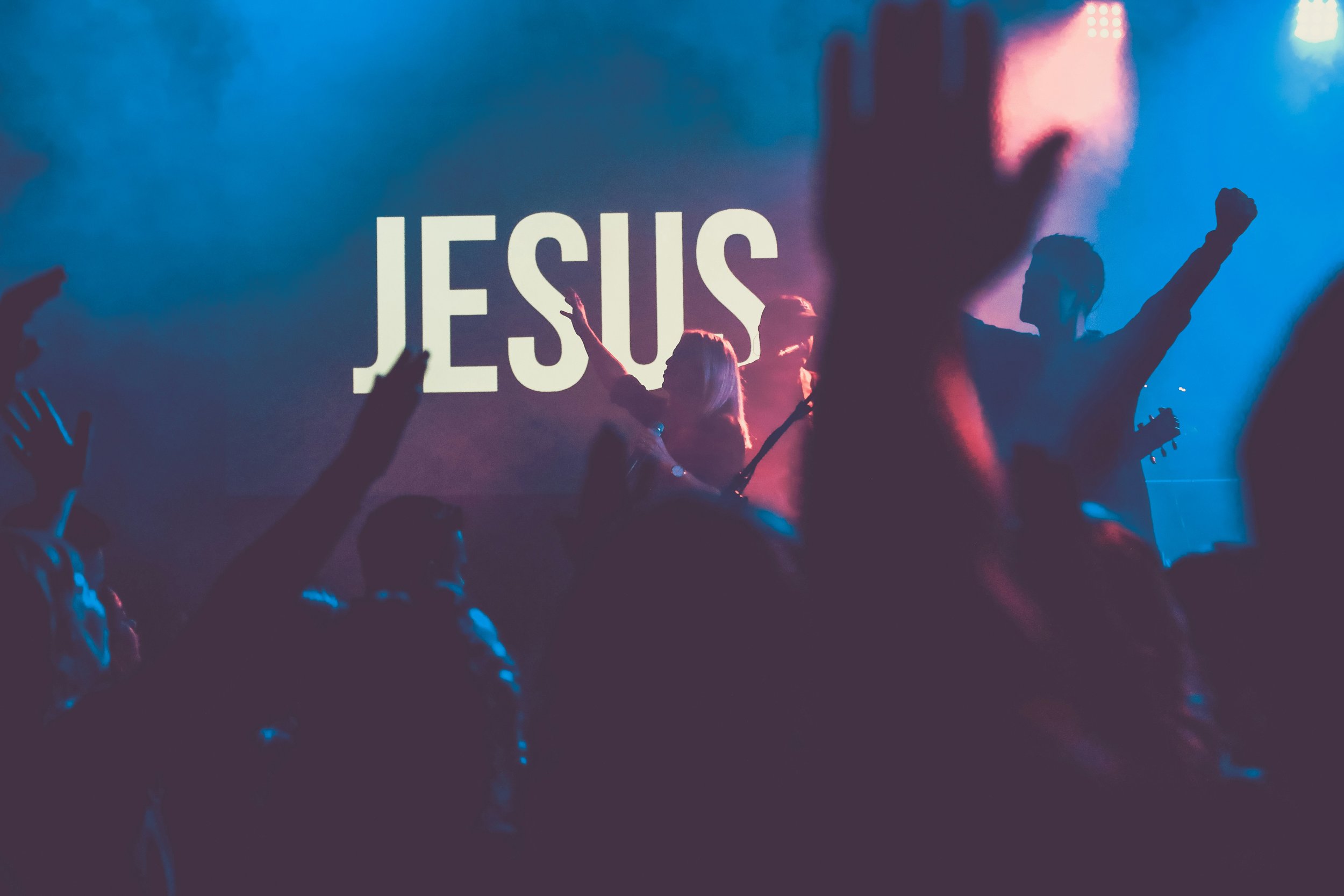
I’ve spent nearly my entire life in non-denominational churches. They are where I first learned about Christ, came to love Christ, and encountered the beauty, truth, and goodness of the Gospel. Growing up, I did not just think they were one good option among many, I thought they were the best form of church. They were the most effective at making converts from what I could see, and that was what mattered. To say that my younger self would have been surprised that my older self would find himself sitting in a non-denominational church and asking, “is this even a church, really?” Is an understatement.
But, it remains the case that calling something a church doesn’t make it a church, and I have found myself asking that very question more than a few times. Perhaps you have too. So, today we’ll be asking, are non-denominational churches even churches?
It’s a spicy question, but before we get into it, let’s make sure we’re on the same page.
What is non-denominationalism?
Non-denominationalism is one of the fastest growing forms of Christianity and now makes up the largest segment of American Protestantism. But what is it, exactly?
While those on the outside sometimes hear non-denominational and think, “oh, so you’re like, not attached to anyone particular belief system,” in reality, non-denominational churches can be very focused on doctrine. In fact, sometimes so much so that they feel no existing denomination aligns closely enough with their beliefs to join it. More on that in a bit.
Strictly speaking, non-denominational churches are simply churches that are not affiliated with any particular denomination. However, as non-denominational churches have skyrocketed in popularity in terms of the overall share of churches in America specifically, they’ve begun to coalesce around certain emphases.
For instance, it’s fair to say that non-denominationalism has become the form of choice for evangelicals. While Evangelicalism isn’t a denomination but rather a movement across denominations, today it is highly concentrated within non-denominational churches.
David Bebbington famously defined Evangelicalism using four key characteristics: activism, biblicism, crucicentrism, and conversionism. Put simply, Evangelicals are focused on making a difference in the world, studying and preaching the Bible, their theology focuses on Jesus death on the cross, usually seen through the lens of it being a penal substitutionary atonement, and they place a high value on the experience of conversion. Thus, you’ll find within these churches language of being born again, adult baptism, and emphasis on sharing your testimony.
As I’ve mentioned, Evangelicals have largely found non-denominationalism to be the best form of church to live out the Evangelical life.
But why is this?
There seems to be a few reasons. When we combine activism and conversionism, we get a very pragmatic faith, lump in a dose of capitalist culture and the separation of church and state forcing churches to fund themselves, and what you get is an ecclesiology which prioritizes results. The church, then, becomes laser-focused on saving the lost. Anything that gets in the way of that, such as the red tape of denominations, can be cut in service of the higher priority of making disciples.
Biblicism can also come into play here. With a high focus on the Bible, often over against tradition, Evangelicals can discard historic forms of church governance, like the episcopacy which was nearly ubiquitous from the time of, at least, Ignatius of Antioch at the end of the first century until the Reformation. If the Bible doesn’t explicitly say you need to be in a denomination to plant a church, then Evangelicals will say it’s not a requirement. And since they’re practical, it’s just easier to not be in one. Again, less red tape.
But biblicism shows up in another way that I’ve already hinted at. With fidelity to Scripture being given immense importance, Evangelicals are often prone to jump ship from organizations at the slightest hint of infidelity to Scripture. This makes staying in large organizations hard, so, it’s often easier to simply go it alone.
Finally, crucicentrism overlaps here in an interesting way as well. By focusing on the cross, Evangelicals are often most concerned with conversion, not necessarily building a kingdom in any visible way. Traditionally, the church saw itself as the kingdom of God in a real tangible sense. See Augustine’s City of God for the most famous portrayal of this. When the church focuses on the kingdom of God, it behooves it to pay attention to institutions. After all, kingdoms require governments. But, if the kingdom aspects are downplayed or spiritualized, then, once again, institutions become less important than making converts.
This point on the kingdom leads us to a critical sub-question of our original question. That is, what is a church?
What is a church?
Determining the nature of the church is a big question, and for more detail, I’ll refer you to my video on 5 models of the church, where I lay out 5 visions for what it means to be a church and the corresponding goals of these models.
For now, I think the real crux of the question for our current discussion is, how important are the institutional aspects of the church? We’ll put aside whether the church is primarily an institution for now, but what we need to know, at the very least, is whether institutional aspects are vital to what it means to be a church.
Let’s lay out three options.
Three Visions of the Church
On the one hand, we could say the church is an institution, and that when Christ spoke about forming the kingdom of God, he had in mind a structured society which is the church in which there are rulers. This model prevailed throughout much of church history, especially in the West. In this, it would be unthinkable to go off and form your own independent church.
Perhaps an analogy would help. On this model, the church is like a government. Like the US Constitution, the church has a ruling document, namely the Bible. Like the Supreme Court, it has the magisterium. And like Congress and the President, it has Bishops and a Pope.
Viewed from this angle, non-denominational churches are essentially leaving the government because it’s corrupt and then forming their own mini communities based off trying to live out the principles of allowing people to pursue life, liberty and happiness. Maybe these churches take inspiration from some of the founding Fathers, but they’re not interested in joining America because America went wrong.
On this model, non-denominational churches don’t seem to be churches. They’re not states within this nation. They’re spinoffs inspired by the document of this nation.
This, of course, is not the only model of the church.
On the far other end of the church spectrum, you have the church as the believing community that exists to preach the gospel and make disciples. This is what I referred to as the church as movement model.
This, I believe, is the primary model of church within non-denominational churches. You’ll often hear great emphasis placed on the word “ekklesia” the greek word from which we derive church, meaning “assembly” or “gathering.” Thus, the church is just a gathering of Christians. If put a bit more theologically high brow, we might say it’s a gathering in which the word of God is preached and the sacraments are rightly administered. This is, after all, how Calvin conceives of the church.
However, one of the difficulties here is the notion of the sacraments being “rightly” administered. This, “rightly” part is often linked, not only to a theology of the sacraments, but also to ordination. Non-denominational churches often have a rather low view of ordination though. Here’s a fun fact for you, in the state of Maryland, you don’t even have to be ordained to start a governmentally recognized church. The act of starting a church makes you ordained in the state’s eyes. I know this, because I was part of a non-denominational church plant. I think many non-denominational churches have a similar theology of ordination. Being ordained is basically, at most, another pastor saying he thinks you should be a pastor. Maybe he prays and lays hands on you while doing it, but it’s far from the historical sense of ordination or apostolic succession which are often tied to, you guessed it, institutional affiliation.
Nevertheless, if we drop the ordination part from the rightly administered sacraments, many non-denominational churches would fit the requirements for being a church under this model. And I’d go one step further, they’re often the best churches of this model.
Here, I feel some need to defend the non-denominational movement, because, while they get a lot of love at the popular level in terms of people attending them, they get a lot of hate from us stuffy theological types. But, if we take the church to be a community heralding the gospel, non-denominational churches are doing a great job of this. They are some of the most effective churches at making converts, and I’d go out on a limb to say that the church in your city baptizing the most people and introducing the highest number of people to faith for the first time is probably a non-denominational church. With their ruthless focus on pragmatic discipleship, non-denominational churches have turned this into a science, and business at times, but that’s for another day.
Finally, let’s evaluate non-denominational churches through my preferred lens, the church as sacrament. In this, the church is the visible sign of Christ’s family on earth. It is not the same as his family, meaning there can be those joined to Jesus who aren’t part of the visible sign, but as the visible sign, it’s the trustworthy instrument.
Within this sacramental model, being a clear sign is paramount. Traditionally, the marks of the church have been that it is one, holy, catholic, and apostolic, we get these four descriptions from the Nicene Creed, or the Nicene-Constantinopolitan creed, if you’re splitting hairs.
Using these, it can be difficult to discern the church within non-denominational churches. They are quite fragmented, rupturing the oneness, they can be very holy, but their connection with Catholicity and Apostolicity is often tenuous. Of course, this depends on how we define Catholicity and Apostolicity, so there’s no shortage of room to quibble on things, but if Catholicity extends throughout time, then the Catholicity or universality of the non-denominational vision of church is difficult to maintain. Apostolicity construed as organic connection with the apostles through succession is not a live option within non-denominationalism, so the only other option is to take apostolicity as teaching what the apostles taught.
Now, lest this come across overly negative, I think it’s worth saying that Avery Cardinal Dulles who proposed this sacramental model, grants that all churches are imperfect signs in need of perfecting. Therefore, saying non-denominational churches are imperfect signs is not unique to them.
But allow me an analogy to make sense of the degrees of perfection in a sign. To review, a sacrament is a visible sign of an invisible grace. As an example, we could think of a birth certificate. A birth certificate showing you were born in the United States is not the same as the invisible grace of being a U.S. citizen, but it is the sign which, having obtained it, one can show they have the grace.
Now, birth certificates usually have certain features. They have the baby’s name, the parents’ names, the place of birth, a fingerprint, and a state or county seal, to just name a few elements. Think of these like the marks of the church. If a birth certificate were not to have some of these elements, it doesn’t mean that the child isn’t a citizen or wasn’t born. In the same way, a church having imperfect marks doesn’t necessarily mean it’s not a church from God’s vantage point. But, from man’s vantage point, if no one saw the birth and all they have is a piece of paper lacking a seal and fingerprints, they might doubt that the certificate is authentic and therefore that the child is a citizen. So too with the church.
Conclusion
So, where does this leave us?
As I mentioned at the beginning of this article, I have benefitted significantly from non-denominational churches, as I trust many of you have as well. The last thing I want is to engender a wave of cage-stage theologians who, armed with a bit of knowledge, now use it to bludgeon the very churches that brought them to Christ. So, hear me loud and clear, the goal of this piece is not for you to go tell your parents, friends, or pastors that the church they know and love is not in fact a church. That is not productive.
And it also might not be true.
In this article, we have walked through three models of what it means to be a church: the institutional model, the movement model, and the sacrament model. On the first model, I think it’s fair to say that non-denominational churches are not churches, or at least not true churches. We compared this to a group of people deciding to independently live out the teachings of the US Constitution but having no organic connection to the United States.
However, before high church Protestants get too comfortable, it’s tenuous to say any Protestant churches are churches on this model. To extend the analogy, if we granted, and this is a big if, that the Catholic Church in the West was the United States in this analogy, but then the Reformers saw that the government was not faithfully adhering to the Constitution and the Executive Office was not being properly checked and was having a little too much fun with executive orders and amendments, so they decide to reform the country and in doing so get kicked out, we have something like a state seceding from the union. Let’s call that state Texas, because we all know it would be Texas.
I think Anglicans can make the best case that this is what they’ve done. They’ve kept the structure of the government and taken the whole state with them. In the same way, the Anglican Church took the Catholic Church in their jurisdiction and just seceded from the union for the sake of showing what it looks like for the U.S. government to function properly.
However, if you do not keep the structure of government but begin making major tweaks, say, eliminating bishops, or changing who can be a citizen through baptism, you get a government that looks more and more like an innovation than a reform.
All that to say, if we grant the institutional model, it becomes a problem for more than non-denominational Christians.
On the second model, the church as movement, we saw non-denominational churches are not just churches, but perhaps churches par excellence. We must admit, whether you love or hate non-denominational churches, they’re effective at preaching and energizing movements of people for the gospel.
On the third model, it was less clear. It seems that non-denominational churches may be imperfect signs, but does that imperfection nullify the sign? This likely depends on the church.
Which brings us to an important final point. Non-denominational churches are, by their nature, independent. Thus, painting with broad brushes is only so effective, seeing as there can be great diversity among these churches.
If I could give some closing advice it would be this: Before we judge from on high whether or not non-denominational churches are churches, we must do the harder, less ego-inducing work of asking what is the church? Without doing this, it’s futile and quite frankly, irresponsible, to make pronouncements on whether non-denominational churches are, properly speaking churches. And I’ll add, as you do this hard work, remember that asking whether the people in non-denominational churches are Christians is a different question entirely.
So, my hope is that we can all explore this question with intellectual honesty, rigor, and even more so, the Christian charity that is not a nice add-on to our theological endeavors, but a prerequisite to them being Christian theology in the first place.